
More than 100,000 people have died in Myanmar’s conflict since the military seized power in February 2021. A United Nations human rights expert warned that civilian attacks are intensifying despite military promises to restore peace.
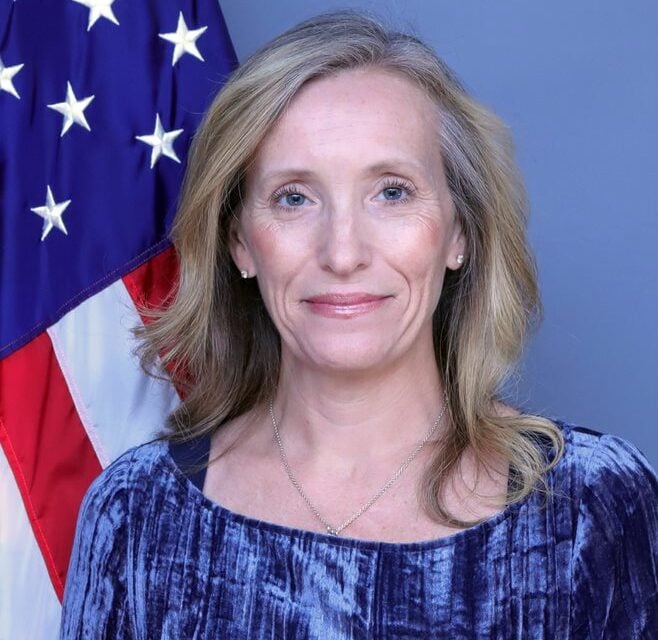
UN Special Rapporteur Kelley Anne Eckels-Currie presented the findings to the UN General Assembly’s Third Committee in New York on October 27, 2026.
The warning followed years of fighting between Myanmar’s armed forces, pro-democracy resistance groups and ethnic armed organisations.
The military overthrew Aung San Suu Kyi’s elected government on February 1, 2021, after alleging widespread fraud in the 2020 election.
Myanmar Conflict Death Toll Passes 100,000
Eckels-Currie told UN delegates that conflict-related deaths had exceeded 100,000 since the coup. She said civilians accounted for the vast majority.
However, the figure was not a new discovery.
The Armed Conflict Location & Event Data Project (ACLED) reported 100,114 conflict-related fatalities in July 2026. Its estimate covered deaths across all sides of the conflict, including combatants.
ACLED compiles reports of violent incidents from media and other sources. The organisation warns that casualty figures are difficult to verify independently in Myanmar.
The Special Rapporteur’s latest report also identified at least 8,384 civilians killed by the military between the coup and September 15, 2026.
That figure represents a narrower category of deaths than the overall conflict estimate.
Military Attacks Continue During Peace Initiative
Myanmar’s military announced a 100-day peace initiative covering April 20 to July 31, 2026.
But the Special Rapporteur reported that violence against civilians intensified during that period.
Approximately 753 civilians died during the 100 days. The report attributed 89% of those deaths to military and paramilitary forces.
The military continued using airstrikes and artillery against civilian infrastructure, including schools, hospitals, religious buildings, markets and displacement camps.
At an October 29 press briefing, Eckels-Currie described the attacks as deliberate efforts to intimidate civilian populations.
The conflict also disrupted humanitarian assistance.
According to the Special Rapporteur, military authorities have restricted movement, disrupted telecommunications and blocked supplies reaching communities in resistance-controlled areas.
Aid workers have faced detention, torture and killings.
UN Investigators Document Alleged War Crimes
Nicholas Koumjian, head of the Independent Investigative Mechanism for Myanmar, told the General Assembly that investigators were examining attacks against civilians and detention-related abuses.
His organisation gathered videos, geospatial imagery and financial records from more than 1,600 sources.
Investigators have also collected testimony from more than 750 witnesses.
Koumjian said the evidence included accounts of torture, sexual violence and attacks on civilian facilities.
The mechanism shared information to support international legal proceedings and national investigations.
The conflict also worsened conditions for the Rohingya population.
UN Special Envoy Julie Bishop warned that Rohingya refugees could not safely return to Myanmar under existing conditions.
The Arakan Army controls 14 of Rakhine State’s 17 townships, according to the information Bishop presented to the committee.
Criminal Economy Helps Sustain Fighting
The Special Rapporteur also identified Myanmar’s expanding illicit economy as a source of financing for continued violence.
She reported that online scams, human trafficking, illegal mining and forced labour were expanding as the country’s formal economy deteriorated.
Profits from criminal activities were helping finance weapons purchases and sustain support within the military, she said.
Eckels-Currie also raised concerns about Chinese criminal networks and the use of cryptocurrency and social media platforms in cross-border scams.
Efforts to disrupt these operations have created additional problems for civilians.
Restrictions on satellite internet services, for example, have affected humanitarian organisations and communities that depend on those connections.
International Divisions Complicate Response
The UN briefing exposed continuing disagreements over responsibility for Myanmar’s crisis.
Russia rejected assessments it considered unbalanced and objected to placing responsibility for the conflict on the authorities in Naypyidaw.
China also challenged the Special Rapporteur’s assessment and urged international efforts to resolve differences rather than aggravate tensions.
The European Union rejected the legitimacy of the military’s electoral process.
Meanwhile, Myanmar’s UN representative, Kyaw Moe Tun, called for an end to weapons and jet fuel supplies to the military.
He displayed a scarf carrying the names and ages of civilians killed during the conflict.
The youngest victim listed was two months old. The oldest was 105.
UN Calls for Action as Myanmar Conflict Continues
Bishop called for measurable progress towards ending the violence and implementing the Association of Southeast Asian Nations’ Five-Point Consensus.
She also urged the release of people held in arbitrary detention.
Eckels-Currie warned that diplomatic engagement could prolong the conflict if it helped legitimise military rule without improving conditions for civilians.
Five years after the coup, Myanmar’s conflict death toll exceeds 100,000, while investigations into attacks on civilians continue.
The latest UN findings show that the humanitarian emergency extends beyond battlefield deaths, with disrupted aid, criminal financing and attacks on civilian communities creating additional obstacles to peace.
Related Coverage: 3 Burmese Journalists Arrested – Press Emblem Campaign Urges UNHRC To Demand Release