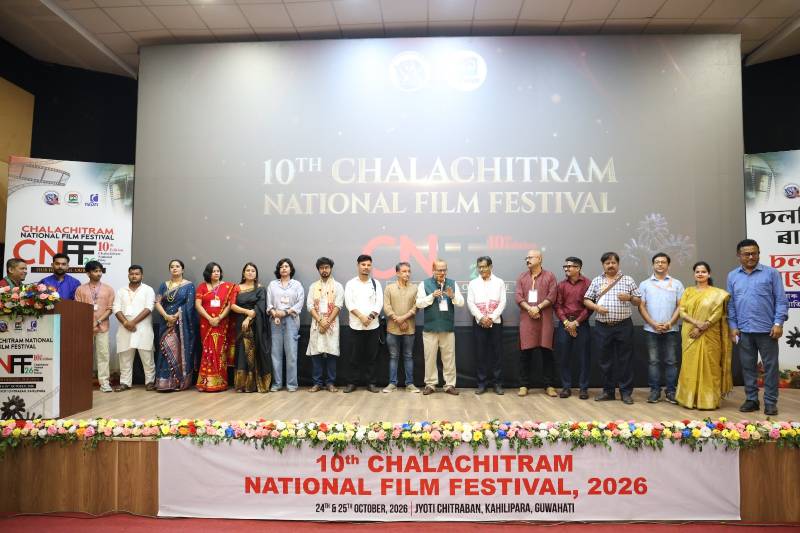
Four films from across India claimed the top honours at the 10th Chalachitram National Film Festival in Guwahati, Assam. The two-day event featured 44 documentaries and short films, celebrating emerging filmmakers and India’s cultural heritage.
The festival concluded on October 25, 2026, at Jyoti Chitraban in Kahilipara, Guwahati.
Toy Gun, directed by Parashuram Thingnam of Manipur, won Best Short Feature in the Northeast India category. The Silent Crisis, directed by Assam filmmaker Smitakshi B Goswami, received the Best Documentary award in the same category.
In the Rest of India section, Somnath Bag’s Gaach Pathar won Best Short Feature. Harikishan MV’s The Redemption received Best Documentary honours.
Chalachitram National Film Festival Recognises Filmmaking Talent
The festival also recognised individual achievements in directing, cinematography and editing.
Sumi Saikia received a Best Director award for In 9 Months, while Shiddhartha Sharma earned the same honour for Ankur.
Rupamjyoti Saikia won Best Cinematographer for The Khamyang Story. Ambarish Barkataki received Best Editor for Ananta Jatra.
The jury also gave a special mention to Take Away, directed by Nithan.
Award winners received trophies, certificates and cash prizes during the closing ceremony, attended by filmmakers, guests and cinema enthusiasts.
Minister Urges Filmmakers to Explore Indian History
Assam minister Nilima Devi and RSS Asom Kshetra Prachar Pramukh Dr Sunil Mohanty attended the closing ceremony.
Devi acknowledged the difficulties filmmakers face when producing documentaries and short features.
She encouraged directors to explore the lives of historical figures and martyrs. Such films, she said, could help younger generations understand India’s history and cultural traditions.
Mohanty raised concerns about the use of cinema to promote narratives he considered harmful to India’s national identity and heritage.
He expressed hope that Chalachitram would encourage filmmakers to produce more films exploring Indian history and culture for international audiences.
Japanese and Uzbek Films Feature in Festival Screenings
The festival opened on October 24 with Kintsugi, a Japanese film directed by Noomen Noomen.
The story follows a young professional struggling with unresolved grief and childhood trauma. His journey eventually leads him towards accepting death and finding peace.
The closing screening featured Present, directed by Uzbek filmmaker Asadbek Akmal Ogli.
The film follows young cancer patients who briefly escape their suffering through the companionship of a clown. Their moments of happiness give way to tragedy and an unexpected revelation.
The international screenings complemented a programme featuring 44 documentaries and short features across competitive and non-competitive sections.
Festival Honours Bhupen Hazarika’s Legacy
The 2026 festival adopted the theme Our Heritage, Our Pride, reflecting its emphasis on cultural identity, traditional values and India’s historical legacy.
Organised by Chalachitram, a subsidiary of Vishwa Samvad Kendra–Assam, the event also paid tribute to legendary Assamese musician and filmmaker Dr Bhupen Hazarika.
A special screening of Bhupen Da Uncut, directed by Bobbeeta Sharma, commemorated the birth centenary of the Bharat Ratna recipient.
National Award-winning filmmaker Dr Santwana Bardoloi inaugurated the festival.
During the opening ceremony, Jyoti Chitraban Film Society chairman Vidyasagar released the festival souvenir Chalachitram. Senior cinema journalist Hemchandra Doley edited the publication.
Organisers also introduced members of the preview committee, including Jhulan Krishna Mahanta, Bibhu Dutta, Hiten Thakuria, Dipak Dutta and Babita Sharma.
The jury included Vishnu Sarma from Delhi, Sujit Debbarma from Tripura and Ramen Bora from Assam.
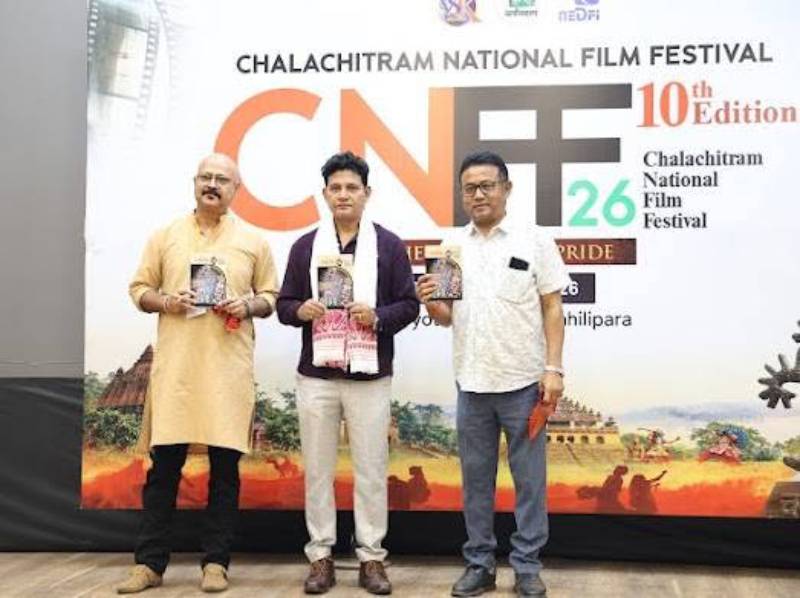
CNFF 10th Edition. Photo: CNFF
From Guwahati Film Festival to CNFF
Chalachitram began as a cultural initiative in 2016, aiming to bring films closer to ordinary audiences while promoting awareness of Indian heritage.
Its first festival took place in 2017 under the name Guwahati Film Festival. Screenings were held at Rabindra Bhawan, the Textile Institute and Cotton University’s mass communication department.
The event moved to Jyoti Chitraban in 2018 and adopted the Chalachitram National Film Festival name in 2019.
Since then, the festival has continued to provide a platform for documentary and short-film makers.
Its programme addresses subjects ranging from indigenous communities and national integration to traditional arts, women’s empowerment, the environment and social reform.
Other areas of interest include India’s freedom movement, mythology, cultural monuments, handicrafts, music and traditional industries.
Organisers Look Towards Future Festivals
Vishwa Samvad Kendra–Assam secretary Kishor Shivam, CNFF president Nava Thakuria and festival secretary Bhagawat Pritam thanked the filmmakers, volunteers and supporters who contributed to the event.
They expressed hope that future festivals would encourage more emerging filmmakers to explore social issues, preserve cultural traditions and support underprivileged communities.
The conclusion of the 10th Chalachitram National Film Festival marked another chapter in the organisation’s efforts to promote documentary and short-film production in India.
Editor’s note: The author, Nava Thakuria, serves as president of the Chalachitram National Film Festival.
| Award | Film | Awardee |
|---|---|---|
| Northeast India Section | ||
| Best Fiction | Toy Gun | Parshuram Thingnam (Director) |
| Best Non-Fiction | The Silent Crisis | Smitakshi Baruah Goswami (Director) |
| Best Cinematography | The Khamyang Story | Rupamjyoti Saikia |
| Best Editing | Anant Jatra | Ambarish Borkotoki |
| Best Director | In 9 Months | Sumi Saikia |
| Best Screenplay | Ankur | Shiddhartha Sharma |
| Rest of India Section | ||
| Best Fiction | Gaach Pathar | Somnath Bag (Director) |
| Best Non-Fiction | The Redemption (Veen Deduppu) | Hari Krishnan M.V. (Director) |
| Jury Mention | Take Away | Nithan (Director) |