
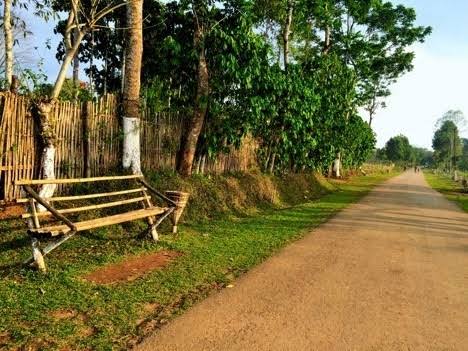
Diphu: Nestled deep within the picturesque Umswai Valley, approximately 35 kilometers from the bustling Guwahati-Kaziranga Highway, lay Shikdamakha.
Today, it stands widely recognized as the cleanest village in the Karbi Anglong district. Yet, long before national sanitation campaigns captured the public imagination.
This model village had already laid the groundwork for a sweeping, community-led environmental revolution.
While modern sanitation frameworks like the Swachh Bharat Abhiyan have standardized cleanliness metrics across India, Shikdamakha’s transformation was entirely organic.
The village’s journey began well before the launch of national initiatives, sparked by a collective consciousness among residents who sought to preserve their local ecosystem and elevate their quality of life.
This early commitment laid a resilient foundation, proving that sustainable civic habits are most effective when born out of local ownership rather than administrative mandates.
Shikdamakha’s success relies on a strict, data-driven system of waste management and collective accountability, highlighted by three core achievements.
The village enforces a stringent prohibition on single-use plastics. To manage daily waste, residents have integrated traditional infrastructure with modern civic discipline.
Villagers have placed handcrafted bamboo baskets in front of every single household for systematic garbage disposal.
Cleanliness here is an active, scheduled routine rather than a passive habit. Residents participate in mandatory community cleanup drives multiple times a week, ensuring that public spaces, footpaths, and natural water bodies remain pristine.
These cumulative efforts caught the attention of regional authorities. The Karbi Anglong Autonomous Council (KAAC) officially recognized Shikdamakha as the very first fully Open Defecation-Free (ODF) village in the entire Karbi Anglong region.
Shikdamakha demonstrates that geographic isolation is no barrier to systemic reform, by blending indigenous resources—like bamboo disposal units—with contemporary environmental discipline.
The village has created a highly replicable model for rural development, as the region navigates ecological and economic transitions.
This valley community remains a definitive benchmark for grassroots environmental stewardship.