
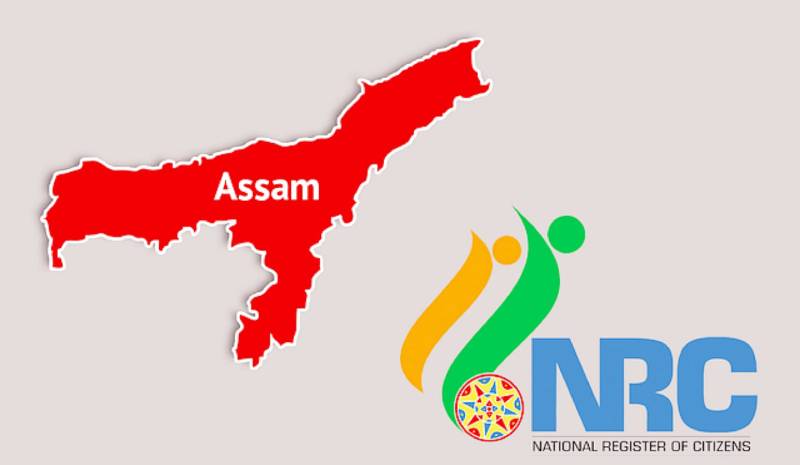
Assam NRC audit shows why citizenship verification requires clear evidence, secure software and accountable appeals.
India’s passport debate exposed a larger problem than the status of one government document.
If an Indian passport cannot conclusively prove citizenship, what evidence can an ordinary citizen rely on?
The Ministry of External Affairs sparked the debate during events marking the 14th Passport Seva Divas. Officials described the passport primarily as a travel document rather than definitive proof of citizenship.
MEA spokesperson Randhir Jaiswal later said fewer than 8% of Indians hold passports. He said the Passports Act governs their role in regulating international departure. (Ministry of External Affairs)
That explanation makes sense as a matter of administration. It remains confusing to citizens who undergo document checks and police verification before receiving a passport.
Indian Passport Citizenship Proof Remains Strong but Not Conclusive
The Passports Act creates an important legal distinction.
Section 6 directs passport authorities to refuse an application when the applicant is not an Indian citizen. This makes an ordinary passport powerful evidence that the government accepted the holder’s citizenship when issuing it.
Section 20 creates an exception. It allows the central government to issue a passport or travel document to a non-citizen when the government considers that action necessary in the public interest.
Taken together, those provisions support a measured conclusion.
An Indian passport strongly supports a citizenship claim. It does not necessarily settle every citizenship dispute on its own.
Citizenship itself comes from the Constitution and the Citizenship Act of 1955. The law recognises citizenship acquired through birth, descent, registration, naturalisation or the incorporation of territory.
People who obtain citizenship through registration or naturalisation receive formal certificates. Many citizens by birth do not receive a separate citizenship certificate and instead rely on records establishing their birth and family circumstances.
The Ministry of Home Affairs highlighted this legal approach in a 2020 parliamentary answer.
Asked whether Aadhaar, passports, voter cards, PAN cards or birth certificates proved citizenship, the ministry did not identify one conclusive document. It said the Citizenship Act and its rules determine citizenship.
That answer explains why the latest passport statement created uncertainty.
The law defines the routes to citizenship, but the government has not given every citizen one universal certificate that conclusively records that status.
Passport Statement Does Not Announce Nationwide NRC
The passport clarification has renewed discussion about a nationwide National Register of Citizens.
However, the statement alone does not establish that the government intends to launch such an exercise.
Indian citizenship law permits the government to maintain a National Register of Indian Citizens. A nationwide verification program would still require a clear policy, operating rules, accepted evidence and effective appeal procedures. (Ministry of Home Affairs)
Assam’s experience shows why those safeguards would matter.
The first NRC emerged from India’s 1951 Census. Authorities later began updating the Assam register under special citizenship provisions connected with the Assam Accord.
The Assam exercise started in December 2014. Authorities published draft registers in 2017 and 2018, followed by a supplementary inclusion and exclusion list in August 2019.
A Comptroller and Auditor General report later found serious weaknesses in the project’s management.
Assam NRC Audit Revealed System Failures
The CAG said the initial project cost rose from ₹288.18 crore to ₹1,602.66 crore. Reported expenditure reached ₹1,579.78 crore by March 2022.
Auditors found excess and inadmissible payments to vendors.
They also found that developers added 215 software utilities to the core system without adequate planning or normal vendor-selection procedures.
The CAG said this approach created a risk of data tampering without an audit trail. An effective audit trail would have allowed officials to determine who changed information and why. (Comptroller and Auditor General of India)
The audit did not conclude that every entry in the register was wrong.
It found that the project lacked sufficient controls to establish confidence in an accurate, error-free register.
The CAG also examined payments to data-entry operators.
It found that contractors paid many operators below the applicable minimum wage between 2016 and 2019. Auditors calculated that workers missed ₹67.14 crore in wages and recommended action against those responsible. (Comptroller and Auditor General of India)
These findings provide a stronger warning than unsupported claims against individual officials.
Citizenship verification affects legal status, voting rights, employment, property and family security. A system handling those decisions needs documented rules, secure software and a complete record of every change.
It also needs accessible appeals.
Government Needs to Clarify Citizenship Evidence
The passport controversy should prompt a clear government explanation.
Citizens need to know which records establish citizenship under different sections of the law. They also need to know how authorities will resolve missing, conflicting or damaged records.
A person born in India may rely on different evidence from someone who gained citizenship through registration or naturalisation. One checklist cannot necessarily address every legal route.
The government should also explain the difference between identification, residence, nationality and citizenship.
Aadhaar identifies a resident. A voter card identifies an enrolled elector. A passport enables international travel and strongly supports nationality. None automatically resolves every disputed citizenship case without reference to the governing law.
The Indian passport citizenship proof debate should not become the basis for predicting a nationwide NRC without evidence.
Instead, it should force a more immediate answer.
The government must tell citizens what evidence they can rely on and what protections will prevent administrative systems from wrongly deciding their legal identity.