Journalist deaths fell by more than half during the first six months of 2026, but 39 media workers still lost their lives worldwide.
The Press Emblem Campaign said the total dropped 54% from the 85 deaths it now records during the same period last year.
The Geneva-based press safety organisation described the decline as welcome after three exceptionally deadly years. However, it warned that conflict, organised crime and continuing impunity still placed journalists at severe risk.
“This decline in the number of victims is finally some good news,” PEC president Blaise Lempen said.
“But 39 murders is still too many.”
Different press freedom organisations use different definitions when counting journalist deaths. PEC’s figures include media workers killed in conflict and other circumstances it considers connected with journalism.
Middle East Leads Journalist Deaths
The Middle East remained the deadliest region, accounting for 19 of the 39 deaths in PEC’s half-year tally.
The organisation recorded nine media workers killed during Israeli military operations in Lebanon and seven in Gaza.
It also counted one journalist death in Syria, one in Iran and one in Yemen.
PEC said Israeli military operations accounted for many of the region’s deaths, particularly in Lebanon. The organisation called for investigations into cases where journalists may have faced deliberate attacks.
Israeli authorities have said in previous cases that they do not deliberately target journalists. They have also accused some media workers connected with armed organisations of participating in hostile activity.
PEC said media affiliation alone does not remove the civilian protection given to journalists unless they directly participate in fighting.
The organisation placed the number of Palestinian journalists killed in Gaza since October 7, 2023, at 228. Its total included seven deaths during 2026, 60 in 2025, 80 in 2024 and 81 during the final months of 2023.
Mexico Remains Latin America’s Deadliest Country
Latin America recorded 12 journalist deaths during the reporting period.
PEC listed Mexico as the region’s most dangerous country, with five journalists killed. Two disappeared during June but authorities found their bodies in July.
The organisation recorded two deaths each in Colombia, Haiti and Venezuela. It counted one in Guatemala.
PEC said criminal organisations, corruption and links between illicit networks and public institutions continued to obstruct investigations in Mexico.
Reporters Without Borders later recorded another Mexican journalist’s death in July, bringing its separate 2026 count for the country to six.
Asia Records Six Journalist Deaths
PEC recorded six journalist deaths across Asia during the first half of the year.
The Philippines had the region’s highest toll, with three victims.
The organisation identified them as Julio Calo of DNN News FM, RJ Nichole Ledesma of Paghimutad-Negros and Nestor Micator of Empire Radio Station.
Bangladesh, India and Pakistan each recorded one death.
Bangladeshi journalist Rana Pratap Bairagi of Dainik BD Khabar and Pakistani journalist Lala Israfil Khan of HUM News were killed during the reporting period.
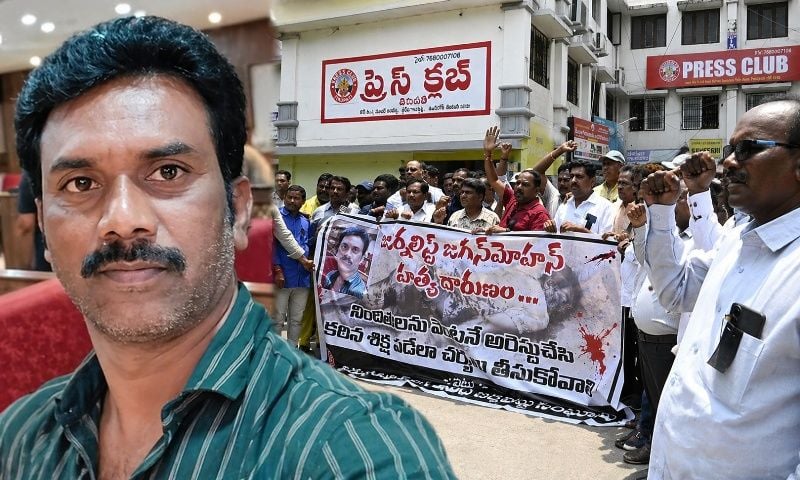
In India, assailants killed ABN Andhra Jyothy reporter V. Jaganmohan Reddy in Andhra Pradesh on April 28.
Reddy was attacked while taking a morning walk in V Kota, Chittoor district. Another journalist suffered injuries while attempting to intervene.
Local residents alleged that the attack may have followed Reddy’s reporting on illegal red sandalwood smuggling. Police said they were investigating the motive and warned against spreading unverified claims while the inquiry continued.
Journalist organisations held protests and demanded that authorities identify and prosecute those responsible.
Africa Records Two Deaths
PEC recorded two journalist deaths in Africa, with one victim each in Somalia and Uganda.
The organisation recorded no journalist deaths in Europe during the first half of 2026 under its methodology. It excluded media workers who died while serving as members of military forces.
That result came despite the continuing war between Russia and Ukraine and repeated attacks affecting media organisations and infrastructure.
PEC has since condemned Russian strikes that damaged several Ukrainian media premises during July. It said media facilities remain civilian sites and must receive protection during armed conflict.
Impunity Remains a Global Threat
PEC said the lower number of deaths had not produced comparable progress in prosecuting those responsible.
The organisation called for national authorities to investigate attacks properly and use international mechanisms when domestic systems fail.
The fall in journalist deaths offers some relief after several devastating years.
However, 39 deaths in six months show that reporters still face lethal danger from war, criminal networks and people seeking to silence independent coverage.