
A newly identified damselfly species in Assam has resolved a scientific identification puzzle dating back nearly a century.
Researchers named the species Dysphaea assamensis after examining specimens collected in the Karbi Anglong district of Northeast India.
The international taxonomic journal Zootaxa published the formal description on October 14, 2026.
For years, researchers had confused damselflies found in Northeast India and Bangladesh with Dysphaea walli, a species described from Myanmar in 1927.
The latest research establishes that the populations represent a separate species.
Five Male Specimens Collected in Karbi Anglong
Researchers collected five male specimens during field surveys in May and June 2026.
The collection site lies beside a partially shaded lowland forest stream in the Karbi Anglong foothills. The stream flows through the Nambor and Garampani Wildlife Sanctuaries.
Scientists examined the specimens to identify anatomical features distinguishing them from Dysphaea walli.
These included differences in reproductive structures and appendages used to distinguish closely related damselfly species.
Although researchers collected no female specimens, they described the female using photographic evidence.
The findings demonstrate how field photography can contribute to scientific identification alongside the physical specimens required for formal taxonomic studies.
Earlier Research Raised Questions About Identification
The discovery builds on research published in 2024 by Matti Hämäläinen and Albert G. Orr.
Their study examined photographs and earlier records of damselflies identified as Dysphaea walli across Northeast India and Bangladesh.
They concluded that the insects appeared to represent an undescribed species.
However, the researchers lacked preserved specimens needed for a formal description.
The 2026 field surveys provided that missing evidence.
With five male specimens available for detailed examination, the new research team formally described and named Dysphaea assamensis.
Four Scientists Collaborate on Discovery
The research team included Rima Amsih of Dibrugarh University and Arajush Payra of Dr Vishwanath Karad MIT World Peace University.
K. A. Subramanian of the Zoological Survey of India and Samrat Sengupta of Debraj Roy College in Assam also contributed.
The species belongs to the damselfly family Euphaeidae.
Its scientific name, assamensis, refers to Assam, where researchers collected the specimens used for its formal description.
Discovery Clarifies Northeast India’s Biodiversity Records
The research corrects earlier identification records and provides a clearer distinction between Dysphaea assamensis and Dysphaea walli.
It also shows why scientists sometimes need physical specimens even when photographs provide strong evidence that a species differs from known insects.
Photographs helped researchers recognise the identification problem. Later specimen collection allowed them to establish the new species formally.
The discovery of Dysphaea assamensis adds to scientific knowledge of Northeast India’s damselflies and resolves a taxonomic question associated with records dating back to 1927.
Related NewsBlaze Coverage: Diphu Dengue Outbreak
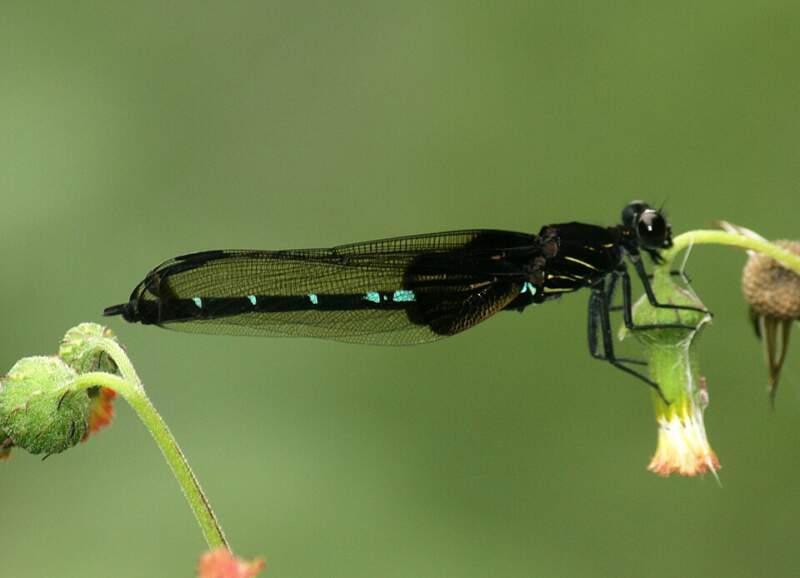
A damselfly photographed in Assam and originally identified as Dysphaea walli. Subsequent research distinguished the regional population as Dysphaea assamensis. Davidvraju, CC BY-SA 4.0, via Wikimedia Commons