Kheroni Unrest & Violence
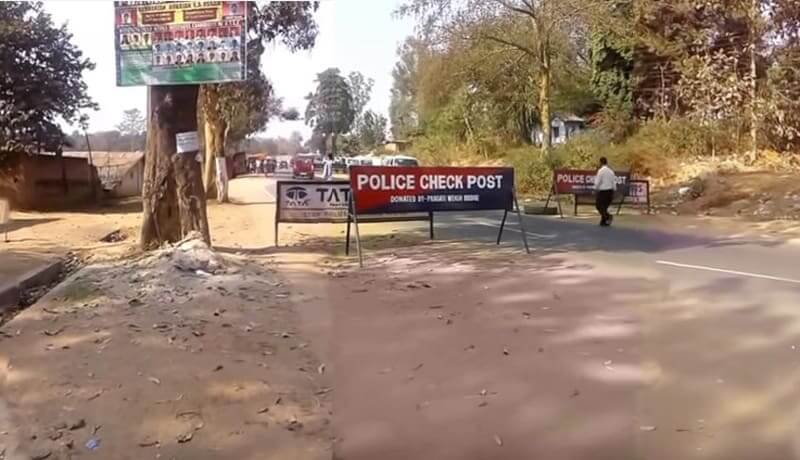
Diphu: The recent violence in Kheroni, West Karbi Anglong district, has exposed deeper and long-standing fault lines over land ownership, administrative ambiguity, and emerging resource politics, far beyond the immediate trigger of protests over alleged encroachment on grazing reserves.
While the agitation has been framed around demands for eviction from Village Grazing Reserves (VGR) and Professional Grazing Reserves (PGR), historical records and administrative developments suggest that Kheroni’s land status has remained legally ambiguous for decades.
Historical Context
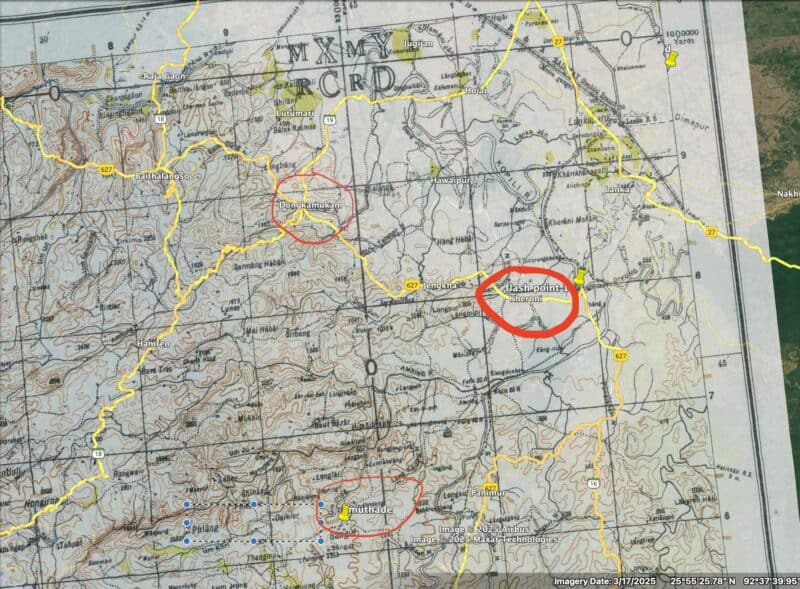
Prior to 1951, the Kheroni area fell within the administrative boundary of Nagaon district, with the southern limits extending along the Amring (Am-I) river up to Um-Khen (now Karbi Langpi).
Settlements by Bihari-origin cultivators along the fertile banks of the Kopili River pre-date the creation of the United North Cachar and Mikir Hills Autonomous District in April 1951.
These settlers were economically integrated into the region through sugarcane cultivation, which sustained sugar factories at Kampur and Barua-Bamun Gaon for decades.
Residents point out that land revenue was paid and government amenities such as schools and electricity were extended, indicating official recognition rather than encroachment.
Pgr–Vgr Claims Under Scrutiny
The present unrest hinges on claims that Kheroni falls under protected PGR and VGR land. However, sources indicate there is no credible documentary evidence officially notifying Kheroni as such. It is learnt that the Karbi Anglong Autonomous Council (KAAC) could not substantiate its claims in legal proceedings due to the absence of formal notifications.
This lack of clarity has fuelled mistrust between tribal organisations and long-settled non-tribal communities, culminating in violent confrontations.
Violence and Alleged Orchestration
The scale of arson witnessed over the past days has raised questions about possible orchestration. Several shops and houses belonging to non-tribal communities were torched, while the ancestral residence of KAAC Chief Executive Member Tuliram Ronghang was also set ablaze.
The situation escalated after the late-night removal of hunger-striking protesters, triggering rumours of arrests and provoking retaliatory violence. Observers believe the attacks were aimed at forcing non-tribal residents to vacate the area.
Resource Politics Angle
Adding to the complexity are strategic considerations linked to future development. An earlier proposal to relocate a failed airport project near Barlangfer to the Kheroni region had stalled under unclear circumstances.
More significantly, Assam is poised at a critical juncture in 2025 following reports of the discovery of over 28 million tons of Rare Earth Elements in areas adjacent to Kampur and Baithalangso. With prospecting expected to expand, analysts caution that land disputes may increasingly intersect with high-value mineral interests.
The Rare Earth Element (REE) deposits, including neodymium, have been discovered at the Jashora Alkaline Complex in the West Karbi Anglong district of Assam, with estimated reserves of28.6 million tones, making it a key site in India’s strategic mineral exploration, alongside other NE states like Meghalaya and Arunachal Pradesh.
The Geological Survey of India (GSI) identified these vast resources within carbonate formations, indicating potential for critical minerals vital for EVs and clean energy.
Resources Found, Rare Earth Oxides (ΣREO), Neodymium (Nd), Niobium (Nb), Titanium (Ti), Vanadium (V).
The presence of Neodymium is crucial for high-strength permanent magnets in electric vehicles (EVs) and wind turbines, boosting India’s clean energy goals. The complex holds a substantial 28.6 million tonnes of REE-bearing deposits.
These REEs are found within ultramafic-alkaline-carbonatite rocks, confirmed through detailed geological and geochemical studies.
The GSI is actively exploring these reserves as part of a larger initiative to uncover India’s northeast mineral wealth, aiming to reduce reliance on imports for strategic minerals.
This discovery positions West Karbi Anglong as a major player in India’s rare earth sector, with further exploration underway to assess the economic viability and development potential of these critical resources.
Need for Permanent Solution
Experts stress that the Kheroni episode highlights the urgent need for a permanent, transparent resolution of land rights and land resource management in Assam’s hill districts. Without clear legal documentation and inclusive dialogue, such conflicts risk recurring, particularly as strategic resources come into focus.
Authorities continue to enforce prohibitory orders and appeal for calm as efforts are underway to restore peace through dialogue.